The Ridge recurs as the place the village looks to and the place the village can be seen from. Its exposure shapes the Knight household's discipline: when Toby needles Ben that he could have turned half of Kinder to glass, Ben's answer is that lighting up the ridge would put them in front of every thermal eye from here to London — a signal, the one thing they cannot afford to give. The high ground is not a hiding place; it is the opposite.
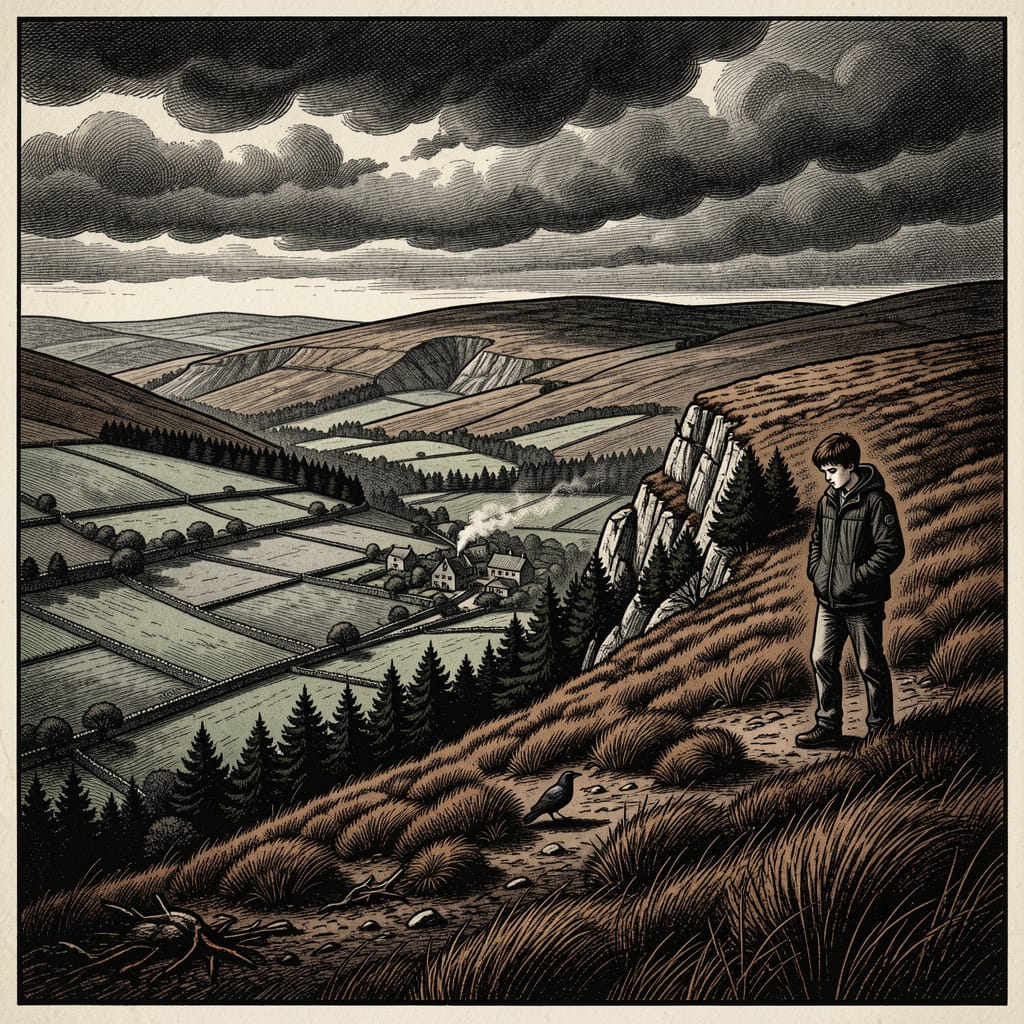
Its most significant appearance comes in Chapter Forty-Four: Breaking the Habit. The footpaths have only just reopened, the closures of the 2001 foot-and-mouth outbreak lifting in stages, the moorland still carrying something scorched under the grass smell when the wind turns. Robert walks them alone on the first day they are open again, expecting something to have shifted. The hills look exactly the same:
He stood on the ridge above Hope's End, watching a crow work at the scorched margin of the field below. He worried at the word abomination in his mind, turning it over until its meaning unravelled into nothing.
— Cambion, Chapter Forty-Four: Breaking the Habit.
Then he turns and walks home and eats whatever Toby has left covered on a plate. The Ridge offers no answer — only the ordinary fact of its continued existence, which is the whole point of the scene: the landscape's vast indifference set against the question Robert is turning over about what he is.
It is not only a place of watching. It is also where Toby once taught Robert to tell the time by the stars above Hope Valley — the Big Dipper circling Polaris, the North Star held steady above the ridge — one of the few moments the high ground is bound up with stillness rather than exposure.